

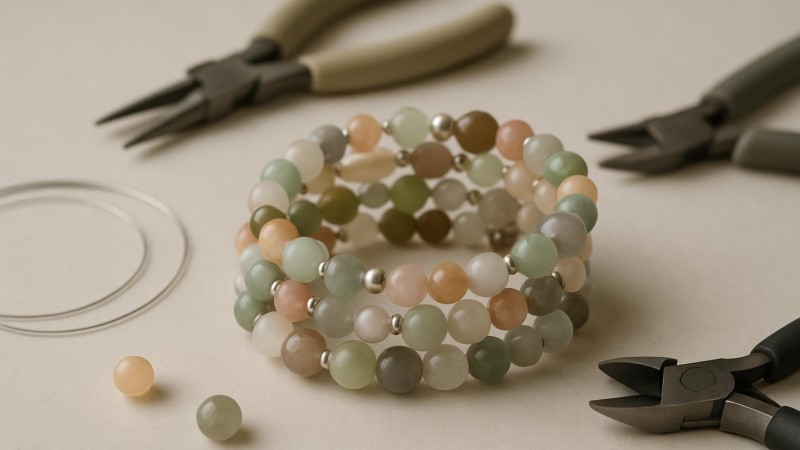
Introduction to Memory Wire Jewelry
Memory wire is a fantastic material for creating durable, elegant bracelets that retain their shape without the need for clasps. Its spring-like design allows it to coil naturally around the wrist, making it ideal for both beginner and seasoned jewelry makers. In this tutorial, we’ll walk you through how to string a memory wire bracelet step by step, from choosing your beads to finishing your ends with flair. Whether you’re working with amethyst beads, glass crystals, or metal spacers, you’ll end up with a stunning, professional-looking piece you’ll be proud to wear or gift.
What Is Memory Wire?
Memory wire is a pre-coiled stainless steel wire that keeps its shape even after being stretched or bent. It comes in various sizes suitable for necklaces, rings, and bracelets. For bracelets, the wire is typically sized to fit most wrists comfortably without adjustment. Because it’s strong and retains its form, you don’t need a clasp — the wire simply wraps around your wrist multiple times, holding its place naturally.
Why Use Memory Wire?
- Shape Retention: It springs back into shape after each wear.
- Ease of Use: No need for crimping tools or clasps.
- Versatility: Works beautifully with a range of materials, from seed beads to larger gemstone rounds.
- Durability: Stainless steel composition resists tarnish and breakage.
Tools and Materials You’ll Need
Before you begin, gather the following supplies:
- Memory wire (bracelet size)
- Memory wire cutters (do not use regular cutters — they’ll dull quickly!)
- Round-nose pliers
- Beads of your choice: gemstones, glass, metal, wood, or freshwater pearls
- Bead stoppers or tape (to prevent beads from sliding off as you work)
- Optional: Charms, jump rings, or dangles for decoration
Step-by-Step Tutorial
Step 1: Measure and Cut Your Memory Wire
Decide how many coils you want your bracelet to have. Two to four loops are typical for a full, layered look. Each loop equals one full circle of wire. Using your memory wire cutters, cut the desired number of loops plus an extra half inch for finishing. Avoid using standard wire cutters, as memory wire’s toughness can damage them.
Step 2: Secure One End
Before you start stringing beads, you need to create a secure stop at one end of the wire. Using your round-nose pliers, grasp the very tip of the wire and twist it into a small loop. This loop will act as a stopper, preventing beads from sliding off. You can also attach a charm or small bead to this loop for decoration if you wish.
Step 3: Plan Your Design
Lay out your beads on a bead board or a flat surface before stringing. This step helps you visualize the color pattern, spacing, and symmetry. Consider mixing textures — for instance, alternating matte stone beads with shiny metal spacers. If you’re working with gemstones like amethyst beads or turquoise, you can highlight their natural color variations by pairing them with neutral tones like silver or white.
Step 4: Begin Stringing the Beads
Now for the fun part: stringing! Start sliding your beads onto the open end of the memory wire. Because the wire is coiled, it may help to hold it in one hand while stringing with the other. Use bead stoppers or a small piece of tape at the free end to prevent your beads from falling off. Continue stringing until you reach about a quarter inch from the end — you’ll need that space to finish the bracelet.
Step 5: Add Decorative Accents
Enhance your bracelet’s design with small details. Add metal spacers, seed beads, or small charms throughout your pattern. If you’re going for a bohemian style, try incorporating wire wrappers or small dangling pendants. For an elegant touch, consider using crystals or faceted beads that catch the light beautifully. Mixing bead sizes and finishes can add depth and visual interest to your bracelet.
Step 6: Finish the Other End
Once your beads are in place, use your round-nose pliers to create another small loop at the open end of the wire. Make sure the last bead is snug against this loop so there’s no visible gap. If you’d like, attach a charm or small drop bead to this loop for a decorative flourish. This loop also ensures your beads stay secure and don’t slide off during wear.
Design Tips and Inspiration
Combining Colors and Textures
When creating a memory wire bracelet, color harmony is key. Choose a palette that complements your personal style or the season. For a soft, romantic look, try pairing rose quartz with freshwater pearls and silver accents. For a bolder statement, combine black onyx with gold spacers or brightly colored glass beads. Mixing matte and glossy finishes can create a dynamic, layered effect.
Incorporating Gemstone Traditions
Many jewelry makers enjoy adding gemstones not just for their beauty, but also for their cultural and traditional meanings. For example, in folklore, amethyst was regarded as a stone of clarity and calm. Ancient cultures believed turquoise brought protection and strength. Rose quartz has long been associated with love and compassion in traditional symbolism. Including such stones in your design can make your bracelet more meaningful to you or the person receiving it.
Creating Themed Bracelets
Memory wire bracelets lend themselves beautifully to themed designs. You might create a celestial bracelet using dark blue beads and star-shaped charms, or an earthy design with green stones and wooden accents. For a minimalist modern style, stick to monochrome tones and metallic beads. The possibilities are endless, and because memory wire is easy to work with, you can experiment freely without complex tools.
Common Mistakes to Avoid
- Using the wrong cutters: Always use memory wire cutters. Regular ones will chip or dull instantly.
- Forgetting to loop the ends: Without loops, beads can slide off easily.
- Overfilling with beads: Leave a small space for looping at the end to avoid cracking beads.
- Ignoring comfort: Test the bracelet’s fit before finishing to ensure it’s comfortable on the wrist.
Maintenance and Care Tips
Memory wire bracelets are durable, but proper care will keep them looking beautiful for years:
- Store them flat or in a circular shape to prevent distortion.
- Avoid excessive bending or twisting beyond their natural coil.
- Keep away from harsh chemicals, perfumes, and prolonged moisture exposure.
- Wipe gently with a soft cloth after wearing to remove oils and residue.
Why Choose PebbleBead for Your Supplies
At PebbleBead, we take pride in offering a curated selection of high-quality materials for jewelry artists and hobbyists alike. Whether you’re looking for gemstone strands, metal findings, or unique accent pieces, you’ll find everything you need to bring your creative ideas to life. Our collection of natural stone beads — from vibrant jasper to luminous freshwater pearls — allows you to craft pieces that reflect your individual style and story.
Conclusion: Craft Your Own Signature Style
Stringing a memory wire bracelet is one of the most rewarding jewelry projects you can undertake. It’s accessible, creative, and endlessly customizable. With a handful of beautiful beads and a coil of memory wire, you can design bracelets that express your personality, commemorate special moments, or simply add sparkle to your everyday look. Once you’ve mastered this technique, you’ll find yourself experimenting with new materials and patterns — perhaps even creating matching sets with earrings or necklaces.
So gather your favorite beads, put on some music, and let your creativity flow. With PebbleBead’s quality supplies and a bit of imagination, your next memory wire bracelet will be a true reflection of your artistry and passion for jewelry making.

Leave a Comment